Gambling-Sponsored Esports Teams Face Rebranding Ahead Of Singapore Major
Several Counter-Strike 2 teams face temporary name and branding changes as Singapore's gambling advertising restrictions affect preparations for the PGL Major.
Listen to this article
British female voice
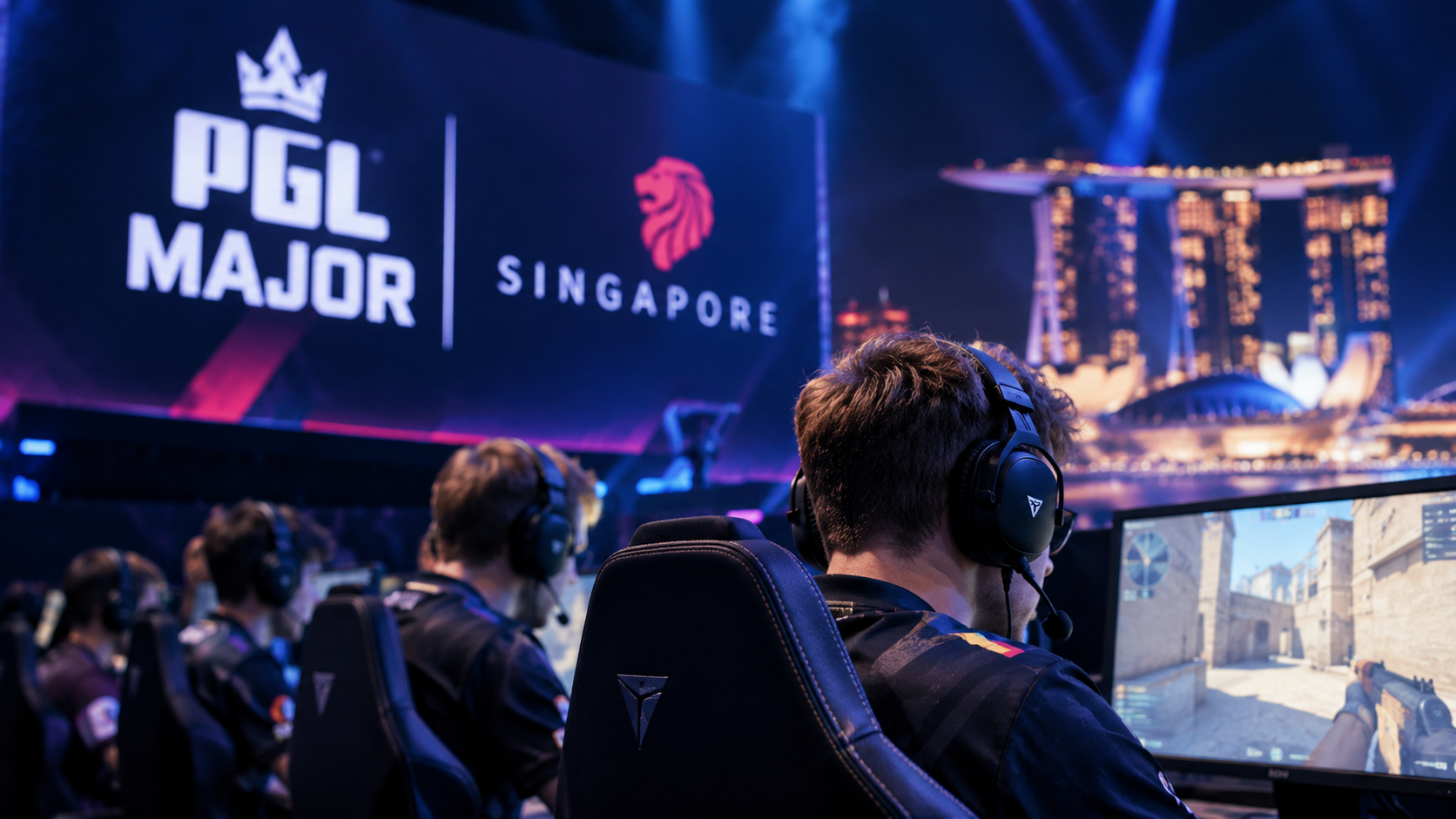
Several leading esports teams are reportedly being required to remove gambling-related branding ahead of the PGL Major Singapore 2026, with some facing the prospect of competing under entirely different names to comply with the country's advertising laws.
The Counter-Strike 2 tournament, scheduled to run from 24 November to 13 December, is expected to attract millions of viewers worldwide. However, Singapore's restrictions on promoting unlicensed gambling services have created complications for teams whose names, logos and commercial identities are directly associated with betting operators.
BC.GAME, 1win Esports, BETBOOM and PARIVISION are among the organisations reportedly affected, with teams said to have been given just 24 hours to submit alternative names, logos and in-game stickers. Unlike conventional sponsorship arrangements, where gambling advertisements can simply be removed from clothing or promotional materials, these organisations face more extensive changes because gambling brands form part of their identities.
Singapore Gambling Laws Create Branding Restrictions
Singapore maintains strict controls over gambling advertising, with online gambling generally restricted to services offered by the state-authorised Singapore Pools. Section 85 of the Gambling Control Act 2022 prohibits the promotion of unlicensed gambling, including sponsorship and brand-sharing arrangements that display gambling companies in connection with events or products.
The restrictions create particular challenges for esports organisations owned or commercially supported by offshore gambling businesses. While these teams regularly compete internationally with gambling-related names and logos, their participation in Singapore requires compliance with local advertising rules regardless of the commercial arrangements permitted elsewhere.
Reports suggest that all gambling sponsorship branding will be prohibited during the tournament, although teams with gambling operators incorporated into their names face the most substantial adjustments. The reported 24-hour deadline has not been independently confirmed by tournament organiser PGL or Counter-Strike developer Valve, and neither organisation has publicly clarified the full requirements.
BC.GAME has nevertheless confirmed that it submitted an alternative team name for consideration and is awaiting a response from the tournament authorities.
BC.GAME Chief Executive Ali Muhanned said:
“As CEO, it’s my responsibility to make sure we follow the rules, and that’s exactly what we’ll continue to do. We’ve submitted an alternative team name and are now waiting to hear back from Valve and PGL.
“We were already aware of the restrictions around gambling-related branding in countries where we are not licensed. We understand the regulations and respect them, so there is no reason for us to challenge this.”
Gambling-Backed Teams Have Previously Competed Under Alternative Names
Temporary rebranding is not uncommon in international esports, particularly when tournaments take place in jurisdictions with restrictive gambling advertising legislation. Teams associated with betting operators have previously adopted alternative identities to participate in competitions without displaying prohibited commercial branding.
At IEM Beijing 2026, which concludes on 8 November, BetBoom has competed under the name BB Team to accommodate local restrictions. Similar arrangements were used during the August edition of Dota 2 tournament The International, where 1win participated as Team Iron Wing.
Comparable restrictions have also affected traditional sports, particularly European football competitions where teams must adapt sponsorship arrangements to comply with different national laws. Inter Milan has played Champions League fixtures without its Betsson.Sport branding in certain jurisdictions, while Unibet has previously replaced its FC Copenhagen shirt sponsorship with Danish Red Cross branding for matches in Spain.
Esports journalist Ollie Ring questioned why the Singapore requirements had reportedly been communicated so close to the tournament, given the country's established regulatory position.
“Singapore is famously stringent on gambling advertising and so PGL definitely should have been aware, and made teams aware of their obligations far in advance,” Ring said.
International Esports Sponsorship Faces Growing Compliance Challenges
The situation illustrates the regulatory difficulties facing gambling companies investing in international esports, where teams compete across jurisdictions with substantially different approaches to betting sponsorship and advertising.
Counter-Strike 2 and Dota 2, both developed by Valve, have historically permitted gambling sponsorship arrangements within their competitive ecosystems. This has enabled betting operators to establish a significant commercial presence through team ownership, naming rights and sponsorship agreements, although local laws can restrict how those relationships are displayed during individual events.
Riot Games, the developer of League of Legends and VALORANT, also relaxed its longstanding restrictions on esports gambling sponsorships in 2025, allowing certain partnerships subject to approval and additional scrutiny. The change reflected the growing commercial importance of betting sponsorship within competitive gaming while maintaining oversight of participating brands.
For gambling-backed organisations, however, international tournament participation increasingly requires adaptable branding arrangements that account for the legal requirements of host countries. The reported changes ahead of PGL Major Singapore demonstrate how these obligations can extend beyond removing advertising to temporarily altering a team's entire public identity.
With the tournament approaching, affected organisations must finalise any necessary changes before competition begins. The precise requirements and approved alternative identities remain subject to confirmation from PGL and Valve, but BC.GAME's submission indicates that preparations to comply with Singapore's gambling advertising restrictions are already underway.
Stay ahead of iGaming
Get the week's key stories, industry insight and exclusive interviews in your inbox.
One email a week. Unsubscribe any time. More about our newsletter