2026 iGaming Trends: Industry Leaders Have Their Say
This special feature brings together leaders from every corner of iGaming to explore the trends, opportunities and challenges set to define the year ahead.

As the iGaming industry looks ahead to 2026, innovation, regulation and evolving player expectations are reshaping the sector at pace. Created in partnership with the iGaming Roundtable — a fast-growing community united by a shared goal to move the industry forward with collaboration at its heart — this special feature brings together leaders from every corner of iGaming to explore the trends, opportunities and challenges set to define the year ahead. Drawing on insights from more than 25 industry professionals who experienced ICE Barcelona firsthand — an exhibition that set the tone for the year ahead with cutting-edge platforms, AI-powered tools and next-generation player engagement solutions — contributors offer perspective on the forces shaping the sector. From smarter personalisation and data-driven marketing to compliance, acquisition strategies and emerging technologies, this feature highlights how leaders are adapting strategies and investing in innovation to stay competitive and help shape the future of iGaming in 2026.
iGaming Roundtable

"At the iGaming Roundtable, we believe in the power of unfiltered conversation. As the leading peer-to-peer community within the sector, we provide a rare space where the 'voice of the industry' isn't just heard. it’s amplified. By removing commercial agendas, we allow for genuine, high-level knowledge exchange between those truly shaping our future.
We are delighted to partner with iGaming.News to spotlight these authentic industry voices in our 2026 Market Trends feature. From the emergence of AI-native development to a transparency in player protection, these insights represent the collective intelligence of our community. This collaboration ensures that the meaningful, informed debates happening within our community sessions provide context and value to the wider global landscape. We aren’t just reporting on change; we are empowering the people driving it."
Alexandre Tomic, Alea

"If you look at what’s really changing the industry, prediction markets stand out, especially in the US. Not because they’re new, but because they fix one of gambling’s biggest problems: players aren’t playing against the house. They play against each other, and the platform just takes a rake. It’s a small detail with a huge impact. More transparent, less adversarial, and honestly, less predatory. Even as an operator, it just feels cleaner.
In traditional gaming, the next big thing won’t be another flashy game. It’ll come from building systems on top of the games that already exist. What I call meta-games. Jackpots are the obvious starting point. At Alea, we’ve built an agnostic jackpot engine that works across all studios and gives operators control over contribution, timing, and player segmentation. That’s not just convenient, it’s the foundation for real player-versus-player dynamics, and for the kinds of social meta-games I’m most excited about.
The next step is players competing together, not just alone. Syndicates, teams, leagues, it’s how people play in real life: lottery pools, office pools, “peñas” in Spain. Online gaming is finally catching up. With meta-games, we can add these social layers on top of existing games, creating experiences that are shared, recurring, and scalable. That’s where the industry is going, and that’s exactly where Alea is pushing.
By 2026, the winners won’t be the ones chasing features. They’ll be the ones building flexible foundations, where competition, collaboration, and scale coexist. That’s not just a product strategy. For me, it’s the next generation of play."
Betting Jobs

"Undoubtably there has been a clear shift over the last 12 months away from remote working roles, a trend which we believe will continue within the iGaming industry.
Importantly, we note that while the number of wholly remote-based roles is declining overall, there is certainly no shortage of candidates seeking positions where they can work from home.
The appetite of candidates to secure remote roles is still very much evident, and this is something not limited purely to women, as was once commonly assumed; it is evident across both genders and on a global scale.
Here at Bettingjobs, we have recorded a drastic decrease in fully remote placements made by our company from 2024 to 2025.
In 2024, over 40% of our overall placements were “remotely based”. By comparison, in 2025, remote placements made up only 18% overall.
With fewer options than in previous years, candidates who seek remote-based employment are now inclined to be far more flexible. Meaning they are likely more negotiable in terms of role title, company and compensation level."
Dave Evans, Chief Product Officer, Buzz Bingo

“In 2026, success in iGaming will be defined by experiences, not just products.
In an increasingly crowded market, operators need to be agile, especially as players are drawn to experiences that are different to traditional formats.
Live, interactive formats that blend entertainment and gaming are emerging as differentiators, while omnichannel models allow players to move seamlessly between in-person and digital without losing a sense of community. Underpinning this shift is the robust and reliable technology so that players can play wherever they are.
Those who combine stand-out products with best-in-class technology will be the operators that stand out from the rest.”
Alex Donohue, MD of Press Box PR

"For years, brands have relied heavily on search rankings to drive digital visibility. Page one on Google was the golden goose. That strategy now faces serious disruption as people increasingly rely on AI to filter, shortlist and recommend for them. They are asking what is best, who they can trust, and what they should do next. With 2026 up on us, Alex Donohue, MD of fast-growing Digital PR agency Press Box PR, shares his thoughts on what this means for iGaming operators and suppliers preparing for this year’s biggest sporting events and their most commercially critical moments.
Traditional SEO helped people find answers. AI tools now point people to brands, not just answers. That is a fundamental change in how discovery works. Authority, trust and relevance now outweigh pure visibility. It is no longer enough to appear. Brands increasingly have to be recommended.
This is not a future problem. It is already shaping how people research products, services and suppliers. What makes 2026 different is scale. This year will be the first time this new behaviour reaches real commercial scale across major global events and regulated sectors. The competitive layer is moving from being visible to being credible.
Why traditional links and rankings are no longer enough
Links and keyword rankings remain essential foundations of digital discovery. But in isolation, they no longer create competitive separation. Many brands now operate in environments where the ability to stand out from the crowd can stem from fewer pieces of high quality media coverage over and above quantity.
AI systems do not rely on a single signal. They evaluate brands through a mix of trust indicators, including reputation, consistency, expert voice, recency, and contextual relevance. The good news for digital PR people is that it’s easy to see which sources the algorithms favour, but the harder part is the ability to influence them.
What now creates separation is whether AI systems, and the people behind them, treat a brand as a trusted source. Coverage volume matters less than consistency of expert voice, attribution, and reputation across trusted environments.
This doesn't mean traditional SEO becomes irrelevant but it means strategies must evolve. Brands that combine solid technical foundations with genuine authority and expert positioning will win.
Discovery is now driven more by reputation than by rankings alone. Brand mentions, expert commentary and narrative consistency increasingly outweigh raw domain metrics. Brands that chase links but neglect authority will lose visibility in recommendation environments where trust decides outcomes.
What AI recommendations now demand from brands and operators
To be recommended at scale, brands now have to meet a higher standard of authority. First-party data and original insight matter more than ever. Generic content that repeats what is already widely available adds no value in an era when AI summarises content at scale.
Expert analysis has to demonstrate real sector knowledge. Timely, well-judged commentary matters, especially when markets move quickly. Saying the same thing across your channels shows you can be relied on. Where regulation is tight and trust is fragile, transparency matters as much as accuracy. And in markets such as sports betting, AI recommendations become a credibility test as much as a visibility channel.
Education becomes visibility. Major global events, particularly the World Cup, introduce time-pressured and often inexperienced audiences. In regulated sectors, operators that explain risk clearly, guide responsibly, and communicate affordability and consumer protection well build trust that survives volatility.
Performance-led storytelling now matters more than promotional marketing. Long-term trust building replaces one-off activity. And crucially, content now has to satisfy both human judgement and AI evaluation. AI systems increasingly mirror what people already trust and treat as credible.
2026’s real-world test case: The World Cup and UK horse racing
Next year turns AI recommendations from concept into a commercial reality. The FIFA World Cup will act as a global catalyst for behavioural change and betting volume. It will draw large numbers of time-pressured users seeking quick guidance, comparisons, and trusted information. A recent Spotlight Sports Group 2026 World Cup Betting Outlook found that 70% of fans plan to place a bet during the tournament, even though only 7% say they feel confident doing so.
UK horse racing provides the counterbalance. It is a year-round, high-frequency, heavily regulated environment where trust is earned slowly and lost quickly. It operates under constant scrutiny, with volatility driven by weather, liquidity shifts and regulatory oversight.
Together, these two environments provide a real-world test of performance and trust. Peaks of attention, volatility, regulatory exposure and reputational risk will all collide. It is during these moments that AI-powered search and recommendation tools will be used most heavily. Users will look for quick answers, but they will also seek reassurance and credibility.
If AI tools do not recommend a brand during these high-pressure windows, its visibility with the most commercially valuable audiences collapses, regardless of how strong its traditional rankings appear.
What success looks like in the AI recommendation era
Success is no longer defined only by traffic volumes or coverage counts. Being cited, summarised and surfaced by AI systems becomes a core visibility metric. Expert voice starts to carry more weight than sheer link volume.
Long-tail brand discovery becomes more valuable than short campaign spikes. Trust and authority must be visible across multiple platforms, not just search engines. Measurement shifts from coverage counts to credibility signals. Are AI systems citing you? Are journalists and analysts treating you as a source? Is your voice appearing in operator and industry research?
The brands that perform best in this environment will be those that understand discovery as an ongoing reputation system, not as a sequence of campaigns.
Why 2026 will separate visible brands from trusted brands
AI will increasingly sit between brands and the people discovering them. Recommendation becomes the new competitive space. Brands that invest in authority now will carry that trust forward. Brands that rely only on old visibility models will be seen less and less.
The World Cup and UK racing will be the first clear proof of this reality at scale. What happens in those environments will not stay confined to sport. It will shape how brands across all sectors understand the difference between being found and being trusted."
ENJOY Gaming, Director of Account Management, Dimokratis Papadimos

"Following ICE 2026 in Barcelona, suppliers are taking stock of the themes that defined this year’s show, including the changing relationship between slots and live casino as player expectations continue to evolve. ENJOY Gaming is among those exploring how changing player behaviour is reshaping the relationship between slots and live casino. The company’s Director of Account Management, Dimokratis Papadimos, explains.
For a long time, slots and live casino have been treated as two very distinct experiences. Slots were built around mechanics and features, while live casino focused on social interaction and traditional table games. What we are seeing now is that players no longer engage with content in such clearly defined ways.
Player behaviour shows a growing level of crossover between verticals, with audiences moving freely between slots and live games within a single session. They are looking for the excitement and familiarity of proven mechanics, but they also value the authenticity, pacing and atmosphere that only a live studio can provide.
At ENJOY, this has led us to focus on Hybrid Live Games. Our approach is about intelligent adaptation - taking mechanics that players already understand and enjoy in slots, and translating them into a live dealer environment in a way that feels natural and authentic.
A clear example is our Hold & Win mechanic, which has been a cornerstone of some of our strongest-performing slot titles. By bringing that same sense of anticipation and tension into a presenter-led live format, we can bridge the gap between two product types and create an experience that feels both familiar and fresh.
From an operator perspective, hybrid games offer clear advantages. They act as a gateway for slot players to engage with live casino, while also increasing overall engagement by combining mechanic-driven excitement with the community and rhythm of live play. This can support longer sessions and stronger player value, while also helping partners differentiate their lobbies with genuinely next-generation content.
We don’t see hybrid live games as a short-term trend. They represent a natural evolution of live casino, shaped by how people actually play today. Our focus is on continuing to build live dealer experiences that remove unnecessary boundaries and deliver the mechanics, entertainment and trust that modern players are looking for."
Luana Monje, Sales Executive at Altenar

"In 2026, we expect a decisive shift from forecasting to implementation. After several years of regulatory uncertainty, particularly with Brazil, and speculation over other emerging markets, ICE presents an opportunity to learn more about which areas are thriving, which look set to see major shifts across the next 12 months, and importantly, where immediate opportunities await. After laying the foundations for further global growth last year with significant investment in our people and infrastructure, we are ready to grasp opportunities in several continents.
The LatAm region, particularly Peru and Chile, continues to strengthen its position as an area of growth. Both markets have demonstrated rising maturity, shaped by longstanding retail betting cultures and a growing expectation for mobile platforms that reflect the same depth, localisation, and familiarity. Operators entering these markets are now required to deliver tailored user experiences rather than applying generic European platform models.
In Africa, market dynamics have shifted significantly. In established regions such as Nigeria and South Africa, operators can no longer rely on basic site offerings. Player expectations have advanced, with growing demand for premium experiences including crash games, sophisticated Bet Builder functions, and fastmoving live markets. At the same time, these features must perform reliably on data networks that can be inconsistent. As a result, success in the region this year will depend not on the volume of available markets, but on the ability to deliver highquality functionality in a reliable, matter with zero latency.
Within Europe, Eastern markets such as Bulgaria and Romania are demonstrating accelerated digital sophistication. These regions are no longer considered emerging; instead, they present highexpectation environments where platform stability, localisation depth, and reliability during peak traffic periods are critical competitive factors.
These shifts define the direction of 2026, the industry is moving towards delivering premium, locally adapted sports betting solutions built on robust technical foundations, which Altenar can provide."
Alastair Cleland, Managing Director at Pentasia

"Rising taxation in the UK continues to place significant strain on operators. Margin compression has accelerated difficult decisions around headcount, operating models, and long-term viability. Redundancies are increasingly visible across the sector.
Alongside this, offshoring has become a more prominent lever to control costs. Customer support, compliance operations, technology, and product functions are being relocated overseas as businesses look to balance rising domestic expenses. While effective, this shift places greater importance on governance, operational oversight, and consistency.
As Alastair Cleland, Managing Director at Pentasia, notes:
“Rising taxation and regulatory cost in mature markets like the UK is forcing operators to fundamentally reassess how and where they operate. We’re seeing this translate into difficult workforce decisions, but also a more strategic shift towards offshore and hybrid models as businesses look to protect long-term sustainability rather than short-term margin.”
East-to-West Expansion Gains Momentum
Many Asia-based and Asia-facing operators are increasingly looking west for growth. Europe, Africa, and LATAM.
This shift requires more than market entry. Operators must rethink localisation, compliance, and brand positioning. Those who succeed will be the ones that invest early in regional expertise and partnerships rather than exporting a single global model.
The UAE Emerges as a Growth Market
The UAE is rapidly establishing itself as a growing geography for both retail and online gaming. Regulatory developments, strong economic fundamentals, and high digital adoption are driving increased interest from international operators and suppliers.
The market’s appeal lies not only in regulation but in a digitally engaged population and demand for premium entertainment experiences. For brands approaching the region with long-term intent and cultural awareness, the opportunity is significant.
AI Becomes Core Infrastructure
Artificial intelligence is no longer experimental. In 2026, it is increasingly embedded across player protection, fraud prevention, marketing, customer support, and personalisation.
The operators seeing real value are those treating AI as infrastructure rather than a bolt-on. Clean data, strong governance, and human oversight are essential. Used well, AI improves efficiency and player experience. Used poorly, it introduces risk.
Reflecting this shift, Cleland adds:
“The operators that will succeed in 2026 are those that combine geographic ambition with technological maturity. AI, mobile-first product design, and smarter payments aren’t differentiators anymore, they’re expectations.”
Mobile, Payments, and Product Experience
Mobile betting apps remain the primary channel for engagement and revenue. Growth is now driven by experience rather than acquisition. UX refinement, live content, and seamless performance are where competitive advantage is won.
Payments have also become a strategic priority. Crypto currencies, open banking integration, and tokenisation are increasingly important as players expect fast, secure, and flexible payment options. Simplifying payment journeys while maintaining compliance directly impacts conversion and retention.
Sweepstakes, Prediction Markets, and Cybersecurity
Across the US, sweepstakes models and prediction markets continue to gain traction. These formats are influencing product design and market strategy, reflecting both regulatory complexity and strong consumer demand.
At the same time, cybersecurity has moved firmly up the board agenda. As platforms expand globally and adopt new technologies, threats are increasing in both frequency and sophistication. In 2026, cybersecurity is not just about protection but about maintaining player trust and brand credibility.
Looking Ahead
The iGaming industry in 2026 is defined by adaptation. Rising costs, expanding markets, and rapid technological change are forcing operators to rethink how they operate.
Those that succeed will be disciplined, informed, and technologically mature. The opportunities are clear, but the cost of standing still has never been higher."
Titans
"Most brands think they’re in the acquisition business. They’re not. They’re in the confidence business. Acquiring a new player costs 6–7 times more than keeping one, a pattern many in the industry observe. Trust and retention are the real profit centers.
Revenue you “rent” depends on constant pressure: more traffic and more promos. Revenue you build comes from a product that holds value after the first session.
Winning brands obsess over unglamorous details: speed, clarity, consistency. Friction is fatal: most players cite payment issues for leaving. Make the first offer readable, the next step obvious, the journey stable, and payouts routine (players expect fast & safe withdrawals). The same traffic yields more value without additional spend.
Responsible play isn’t separate from growth; it’s one of your strongest trust signals. Offer simple limits, real transparency, and early guardrails. That’s how players stay."
Ataur Rosul Abeer, Sales Supervisor at Slotegrator

In 2026, iGaming is moving from rapid expansion to strategic maturity. The industry is defined by who builds the most resilient and adaptable business models.
Regulation has become a competitive differentiator. Operators that embed compliance into their platform architecture and product design are better positioned for sustainable growth, especially as multi-jurisdictional operations become the norm rather than the exception.
Player engagement is also evolving. Personalisation is shifting from surface-level marketing tools to core product functionality like shaping game discovery, UX, and localisation strategies. This raises the bar for data management and platform flexibility.
On the technology side, modular, API-driven platforms are setting the pace. Brands want speed to market, the ability to scale across regions, and freedom to experiment without long development cycles. This modular approach enables faster launches and more focused positioning in highly competitive markets.
The biggest challenge in 2026 is standing out in a crowded and regulated landscape. The biggest opportunity lies in building long-term value — combining compliance, technology, and player-centric design into a single, cohesive strategy.
Yevhen Krazhan, CSO at GR8 Tech

"One of the clear trends we tracked in 2025 was the generational shift in esports betting. Gen Z (18-24) grew from 34% to nearly 46% of esports bettors, while the 25-34 segment dropped proportionally. That is a significant audience realignment in a single year, and it comes with different expectations: mobile-first interfaces, faster gameplay loops, integration with the streaming content they already consume.
On the casino side, there are two distinct engagement patterns that operators need to serve simultaneously. Instant games, such as Aviator, Balloon, and JetX, dominate the bet count because they deliver fast rounds, quick decisions, and high replay value. Players cycle through these games rapidly and often. Meanwhile, established slot franchises like Gates of Olympus, Sugar Rush 1000, and Sweet Bonanza 1000 continue to sustain steady traffic because they offer gameplay mechanics players already know and trust. A good idea is to keep these two segments balanced and fluctuate along with player preferences—meaning also tracking behaviors and adjusting accordingly.
Regionally, MENA continues demonstrating strong casino appetite, with operators in that market reporting up to 80% of GGR coming from casino verticals. LATAM is also showing growth, though the distribution between sports and casino varies more by specific countries’ player preferences.
One trend worth watching closely: the growing adoption of crypto payments and their strong correlation with VIP players. VIP segments generate a large share of turnover despite representing a small fraction of the player base, and an increasing number of these high-value players prefer crypto for speed, privacy, and convenience. Operators looking to capture or retain VIP traffic in 2026 should seriously consider expanding their crypto capabilities. A solution like GR8 Tech’s Crypto Turnkey, which offers flexible multi-wallet and seamless in-platform exchange, can be the route to take.
The broader takeaway? Player expectations are fragmenting; everyone’s chasing something new and exciting, at the same time, consistently returning to favorites. Prerequisites of success are a platform flexible enough to serve all these fluctuations, attention to what the data tells, and not assuming one market's playbook works everywhere else."
Vlad Chernov, N1 Partners Deputy Head of Affiliates

Main points for iGaming growth in 2026 are player retention and lifetime value, payment infrastructure, and regulations. This is a general trend for both emerging markets and Tier-
1. Traffic volumes are moving into the background, especially when we speak about Tier 1 GEOs N1 Partners works with. Tier-1 markets will remain the backbone of sustainable revenue due to their strong purchasing power, predictable behavior, and high retention rates. Australia, New Zealand, Canada, Germany, Norway, Austria, and Switzerland – these are GEOs with additional growth opportunities for affiliates and advertisers willing to invest early in localization and long-term brand building.
The main competitive advantage in these markets will come from understanding local payment preferences, cultural expectations, and user trust factors. Simply entering a market will no longer be enough for the long-term distance - success will depend on how well products, messaging, and onboarding experiences are adapted to local players.
Key regulatory developments: Regulatory processes across iGaming markets are expected to become more structured and consistently enforced in 2026. While this may limit short-term flexibility for some operators and affiliates, it ultimately strengthens the ecosystem by eliminating low-quality traffic sources and unethical practices. Tier 1 markets with clear licensing requirements and transparent compliance standards tend to produce higher-value players and more stable long-term revenue.
For affiliates, this means stricter requirements around content accuracy, finding the best approaches which works for our geos. Marketing strategies will increasingly need to align with local regulations, including clear disclaimers, responsible gambling information, and honest representation of products. Those who adapt proactively will benefit from reduced competition and stronger partnerships with compliant brands.
Innovations in technology, platforms and player engagement: The role of technologies for both players and affiliates will play an increasingly important role in 2026. AI-driven analytics, predictive LTV modeling, and advanced CRM systems will move from optional tools to core infrastructure. These technologies allow operators and affiliates to evaluate traffic quality earlier, personalize user journeys, and optimize campaigns with far greater precision. There will be more and more tasks that may be transferred to AI tools, and it will definitely make scaling easier.
When it comes to user engagement, bonus mechanics and activities will become more sophisticated. Gamification, personalized bonus structures, dynamic content, and cross-platform experiences will become key drivers of retention. Platforms that successfully combine data intelligence with engaging user experiences will see higher retention, improved monetization, and stronger affiliate relationships.
Shifts in consumer behaviour or expectations: Player behavior is becoming more sophisticated and value-driven. Modern users expect fast onboarding, seamless payment options, transparent terms, and content that helps them make informed decisions. Trust has become a critical conversion factor, particularly in regulated markets, where players are more cautious and brand-aware.
In 2026, affiliates and operators will need to focus less on aggressive acquisition tactics and more on relevance, usability, and long-term engagement. Localized content, clear communication, and strong affiliate community will influence both conversion rates and retention.
Responsible gambling and sustainability initiatives: Responsible gambling is evolving into a core component of sustainable growth. Brands that actively implement player protection tools, transparent limits, and proactive communication strategies tend to see stronger retention and healthier lifetime value.
From an affiliate perspective, promoting sustainable brands leads to more stable earnings and long-term partnerships. In 2026, success will depend on aligning business goals with ethical practices, regulatory expectations, and genuine care for player experience. Sustainability is no longer a trend - it is a requirement for long-term viability in the iGaming ecosystem.
Jurnii CEO and Founder, Fraser Dunk

"After nearly 20 years in gaming, I’ve seen the same patterns repeat—regulatory waves, grey-market surges, and copied “innovations.” In a crowded market, only three things differentiate a brand (outside of marketing spend): UX, value proposition, and brand identity. In 2026, consumer behaviour will evolve in ways that test all three.
Prediction Markets Are Shifting the Product Model
I was at Betfair when the Sportsbook was launched on top of the Exchange and saw the complexities in cross-selling between the two, as well as the impact on market positioning and target audiences. I'm keenly watching how brands will react to the rise and look to integrate the user demand in their existing books. Platforms like Polymarket and Kalshi are blurring the line between betting and trading, offering users tradable event outcomes with $0–$1 odds. Traditional operators are now eyeing this space as users embrace more interactive, sentiment-driven formats. Prediction markets empower players to act more like traders—managing portfolios and reacting to news in real time. Engagement increases, but so does cognitive load, risk and the customer learning curve. The challenge will be integrating this demand into legacy sportsbooks without cannibalising core propositions or confusing audiences.
AI Is Rewriting the Player Journey
AI’s reach across the player lifecycle is expanding. From segmentation to real-time orchestration, platforms like Fast Track and Optimove are automating key moments—anticipating churn, tailoring promos, and delivering contextual nudges at scale.
But with this comes risk. Over-personalisation can backfire if it feels intrusive or irrelevant. Successful brands will use AI to empower players, not just target them. A new frontier is emerging as operators begin developing proprietary LLMs to retain control over data, ensure compliance, and build tailored conversational experiences. These models will power hyper-personalised interfaces while boosting privacy, trust, and retention.
AI is also transforming support. As automation handles 90% of queries, the human layer becomes a premium experience—particularly for VIPs or high-stakes issues. Expect to see operators turning access to human experts into a loyalty perk, making support a revenue lever rather than a cost centre.
Loyalty Is Dead, UX Is Everything
Modern bettors are highly selective and quick to churn. 43% of U.S. players have downloaded five or more betting apps; only 5% stick to one. They chase the best odds, fastest payouts, and most intuitive UX. Features like real-time streaming, social betting, and influencer picks may spike engagement, but they’re easily copied. What wins in 2026 is the total experience—speed, value, trust, and a frictionless journey.
Discovery Channels Are Fragmenting
Player acquisition is shifting quickly. While affiliates and traditional ads remain important, discovery is moving toward:
- AI Assistants recommending platforms in search/chat environments.
- Influencer channels, where players trust creators more than logos.
- Owned content like blogs, YouTube, and communities, turning operators into media brands.
- Regulatory shifts, limiting advertising and raising acquisition costs, which will force brands to focus on retention.
The impact of these on attribution models will be significant — discovery is becoming more diffuse, multi-touch, and harder to track using legacy models"
Simon Westbury, Strategic Advisor to 1xBet

"For too long, the relationship between iGaming operators and regulators has been defined by a "defensive position." We have lived in a world where regulators were viewed primarily as enforcement agents and operators were seen as entities to be micromanaged. As we move through 2026, it is clear that this siloed approach has reached its limit. If we are serious about the "Three Cs"—Communication, Clarity, and Consistency—we must move toward a model of radical transparency and collaborative protection.
At 1xBet, our strategy for 2026 is built on the belief that player protection should be "built-in, not bolted-on." This shift is not just ethical; it is operational. Recent data from our International Player Safety Index for Western Europe and Africa, reveals a startling disconnect: while most operators prioritise safety, a significant percentage remain unsatisfied with the clarity of current regulatory guidance. We are closing that gap by moving away from reactive compliance and toward proactive, data-led intervention.
The goal is to identify at-risk behavior at the earliest possible stage, long before a player needs to self-exclude. By using real-time risk detection and transparent AI-assisted workflows, we can offer human-centered safeguards that respect personal liberty while preventing harm. However, these tools only work if they are developed in dialogue with our stakeholders. We are actively inviting regulators and politicians into the room to discuss what "good" looks like. We aren't just sharing our successes; we are sharing our data and our friction points to help build frameworks that are proportionate, auditable, and effective across multiple jurisdictions.
The danger of over-regulation is real: if we make the regulated environment too restrictive or "micromanaged," we inadvertently push players toward the black market where protection is non-existent. Our intention is to lead the industry in showing that a safe marketplace is a sustainable marketplace. By fostering an open, honest narrative with our partners and regulators, we are proving that transparency is the most powerful tool in our toolbox. We aren't just asking the industry to trust us; we are providing the transparency and the evidence to earn that trust. It is time to stop viewing regulation as a hurdle and start seeing it as a shared foundation for the future of entertainment."
Sporting Risk, Joe Adair - Senior Sales Manager

"The 2026 World Cup presents a rare opportunity for operators, offering a narrow window in which targeted investment in product innovation can deliver outsized returns. Those who can successfully capture the narratives of the tournament and translate them into an interactive betting experience will be best placed to fully capitalize on the surge in global engagement the World Cup inevitably brings.
This is precisely where we have been focussing our effort, building a host of additional markets and bespoke product enhancements specifically designed for World Cup 2026. By expanding market depth and flexibility around the tournament, Sporting Risk aims to enable operators to differentiate their offering, drive sustained engagement throughout the competition, and maximise the long-term value of one of the most important sporting events in the global calendar.
Shifts in Consumer Behaviour
Consumer behaviour is not monolithic, but a clear cohort is emerging whose preferences have shifted away from traditional pre-match betting toward in-play and faster-moving markets. Today’s players are increasingly drawn to real-time, event-driven experiences that mirror how they consume live sport; moment by moment, across multiple screens, and with an expectation of instant interaction. This has accelerated demand for markets that reflect the context and narrative of the game, such as Betbuilders that allow customers to construct bets based on what they are seeing unfold, or markets that enable them to bet for or against individual performances.
Key Regulatory Developments
Throughout 2025, the conversation around regulation has intensified, particularly regarding its impact on channelisation between regulated and black markets. Tax increases in the UK, alongside the proposed tax changes in Brazil, have reignited the debate through the global iGaming industry about their effectiveness and overall impact. The consistent theme is that operators are under increasing pressure to protect profitability in the face of rising costs, leaving them with little choice but to increase margins.
However, higher margins inevitably expose operators to the risk of losing turnover, as price-sensitive customers migrate from regulated environments to unregulated alternatives offering lower margins. This dynamic presents a growing challenge for licensed operators striving to balance compliance, sustainability, and competitiveness.
Betbuilder products are, in many ways, more resilient to this type of margin-driven competition. The underlying mechanics of Betbuilder are what keep customers coming back, rather than pure price sensitivity.
In this context, investing in a best-in-class Betbuilder with wide market variety and depth is an effective strategy. It enables operators to defend margin, drive differentiation, and maintain customer engagement within regulated markets, even as broader economic and regulatory pressures continue to mount."
JJ Williams, CEO of DevilFish Poker
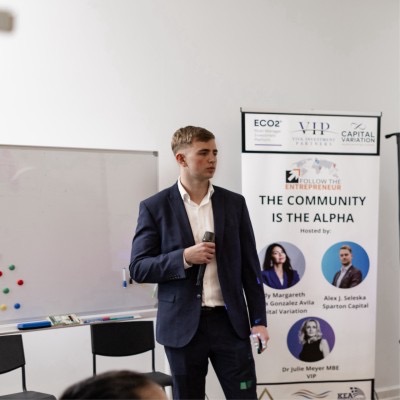
"For decades, the iGaming industry has been obsessed with the "transaction "and the moment a player places a bet. However in 2026, the real value in our industry has shifted from the bet to the identity. The traditional "grinder" model is being superseded by a new generation of players who don't just want to win; they want to belong. At DevilFish, we’ve seen this play out in real-time. By moving away from traditional gambling mechanics and toward a community-first, social model, we aren't just building a platform; we are building a digital ecosystem where players stay because of who they are, not just what they win.
The biggest trend defining 2026 is the convergence of social gaming and digital assets. In our world, a poker avatar isn't just a JPEG; it’s your Identity. Whether powered by blockchain or proprietary tech, these assets give players a sense of "skin in the game" that transcends a bankroll. We’re seeing players hold onto their digital skins for years, showcasing them on social media and treating them as an extension of their personality. This is the "Roblox-ification" of poker. Younger, tech-savvy audiences—the "Gen D" crowd—expect customisation, storytelling, and social recognition. If your 2026 strategy doesn't include a way for players to "flex" their achievements and status, you're speaking a language they no longer understand.
Furthermore, we must address the "scroll culture." The era of the four-hour poker session is fading. In 2026, engagement is won in ten-minute bursts. We are seeing massive success with fast-paced, points-based games and themed tables that mirror the rapid consumption of a TikTok feed. This speed-to-value approach is how we keep poker culturally relevant. By stripping away the barriers of traditional real-money wagering, we’ve opened the door to a global audience that values entertainment over risk.
Ultimately, 2026 is about Community. When you have thousands of players talking to each other daily in Discord, you aren't just an app on their phone; you are a part of their social life. The future of iGaming isn't in finding new ways to take a rake; it’s in finding new ways to provide a home for the player’s digital soul. The companies that stop acting like casinos and start acting like social networks are the ones that will dominate this decade."
Mike Waizman, CMO at NGM Game

A brand’s media image will influence partner choice
In 2026, the industry will shift from chasing the number of releases to building a strong brand code. Operators will stop onboarding hundreds of studios and instead focus on deeper work with selected partners, expecting exclusivity and a recognizable creative signature.
The era of single standalone games is fading. The market will demand strong series and built-in meta mechanics (such as missions and collections) integrated directly into the product.
At the same time, products will not perform equally across all markets. To succeed in LATAM or Africa, everything will need adaptation — from UX to game pace.
Expert tip:
Win on clarity, not on scale.
Build GEO stories.
Test small. Launch only what proves value.
Use AI to shorten research and speed up creative production.
Keep strategy human.
Protect one stable brand voice everywhere.
Steven Paton, Commercial Manager, WiseGaming

"As the iGaming industry moves deeper into 2026, the focus will continue to shift from rapid expansion to measured, sustainable execution. While global demand remains strong, operators today are being challenged to scale responsibly, operate efficiently, and build brands designed for longevity rather than short-term growth spikes. This shift is increasingly visible in how platforms and operators collaborate, with WiseGaming seeing first-hand how priorities are moving from speed alone to long-term operational resilience.
One of the most defining developments this year is the industrialisation of artificial intelligence. AI has moved beyond experimentation and is now embedded across fraud prevention, player risk management, automated monitoring, and personalised engagement. The emphasis across the industry is now pragmatic rather than conceptual. AI is judged not on innovation optics, but on its ability to deliver transparent, auditable outcomes that protect players while supporting sustainable commercial performance — a balance that platforms such as WiseGaming continue to prioritise as part of their core architecture.
Alongside this, player trust and brand resilience are becoming central to competitive positioning. With acquisition costs rising and marketing restrictions tightening across regulated markets, operators are reallocating focus toward retention, UX optimisation, and responsible engagement. Trust is no longer treated as a soft metric — it directly influences lifetime value, regulatory standing, and long-term profitability. Operators that embed player protection and transparency into their operating models are proving better positioned to weather market shifts and regulatory change.
Regulation continues to shape strategic decision-making, particularly as new frameworks mature across Latin America and parts of Europe. While regulatory complexity remains a challenge, clearer licensing structures are unlocking meaningful opportunities for operators prepared to operate responsibly from day one. Platforms built to support multi-licence operations, jurisdiction-specific controls, and local reporting are helping brands expand faster while reducing operational risk. In this environment, compliance is increasingly viewed as a growth enabler rather than a constraint, especially when supported by flexible platform infrastructure.
Product evolution is also becoming more targeted. Rather than broad experimentation, operators are refining their offerings around real player behaviour — introducing gamification layers, social mechanics, and hybrid formats that sit between traditional casino and sportsbook models. These developments are expanding the addressable audience while reinforcing engagement and retention, an approach WiseGaming continues to support through modular technology and market-specific configuration.
Challenges remain. Platform rigidity, fragmented regulation, and rising operational costs still limit agility for some brands. Operators reliant on inflexible technology or purely transactional supplier relationships may struggle to keep pace with a market that increasingly rewards collaboration, adaptability, and operational maturity.
Looking ahead, the operators best positioned for success in 2026 will be those that combine scalable technology, responsible growth frameworks, and strong partnerships. The direction of travel is clear: the next phase of iGaming will be defined not by how fast companies grow, but by how well they execute."
Ramiro Atucha, Atucha Strategic Advisory

"Every year brings new narratives to the iGaming industry, but 2026 will be different. It will be less about promises and more about exposure. The decisions being made now -by operators, suppliers, regulators, and governments -will clearly separate those building sustainable businesses from those relying on short-term tactics.
Artificial intelligence is the most visible example. Almost everyone is talking about AI, and many companies are rushing to position it as their next competitive advantage. In reality, we are still at an early stage. The real differentiator will not be who adopts AI first, but who applies it responsibly, transparently, and with a clear understanding of its limits. AI used to genuinely improve player experience, operational efficiency, and risk management can be powerful. AI used without guardrails, particularly in player targeting or behavioral analysis, will quickly become a reputational and regulatory liability. In 2026, we will begin to see which companies treated AI as a tool, and which treated it as a marketing slogan.
Regulation is the second fault line, and the warning signs are already visible. In the UK, rising tax pressure and regulatory tightening are contributing to layoffs, operators exiting the market, and, most concerning, players migrating toward unregulated alternatives. Brazil risks following a similar path if regulatory instability continues to penalise those who invested heavily to become licensed and compliant, while rewarding those who stayed outside the system. When regulation undermines the regulated market, it does not protect players, it pushes them away.
Emerging markets will amplify these lessons. Mexico remains one of the largest growth opportunities in the region, but only if regulation avoids driving players underground. Chile is moving toward regulation, and expectations are high, but the outcome will depend entirely on execution. Ecuador, meanwhile, serves as a reminder that stalled or inconsistent regulatory processes erode confidence and delay investment. Markets regulating for the first time, or updating outdated frameworks, have no excuse not to learn from recent experiences in Germany, the UK, and Brazil.
At the same time, we are seeing some signs of oversaturation. More operators, higher compliance costs, and aggressive competition for visibility are becoming the norm. Marketing and sponsorship costs have escalated dramatically, particularly in markets like Brazil, where deals that were once affordable are now unsustainable. Efficiency is no longer a competitive advantage, it is a requirement for survival.
Finally, consumer expectations have fundamentally changed. Players are more informed, more demanding, and far less tolerant of misleading messaging. The era of influencer-driven narratives suggesting gambling is a path to easy money should have never existed, but is now officially over. Responsible gaming, transparency, and long-term player relationships are no longer optional extras, they are central to sustainability.
2026 will not be forgiving, but it will be clarifying. Those who align technology, regulation, and responsibility around long-term value will emerge stronger. Those who do not will find that the market -and the player- have already moved on."
Plexus Media CEO, Jason Sukhraj

"In 2026, the iGaming industry is entering a more deliberate phase. After several years of rapid expansion, operators are spending more time thinking about how growth is structured, how it is measured, and how different parts of the business work together.
Growth remains strong, but the conversation has changed. Rather than chasing scale at all costs, operators are aligning product, media, and measurement more intentionally. New formats are entering the mainstream, bringing in users with higher expectations and a more deliberate mindset. Together, these shifts create opportunities for teams that can distinguish lasting signals from short-term noise and build with intention rather than reacting to every new development.
Regulation remains a central force in how the industry is evolving, but the more meaningful shift is how it is being applied across the business. Advertising standards, player protections, and data rules increasingly influence decisions across product design, media planning, measurement, and customer experience. Operators are spending less time treating compliance as a separate function and more time understanding how regulatory change translates into day-to-day execution.
2026 includes several major global sporting events that materially shape the calendar. Moments like the FIFA World Cup and the Olympics concentrate attention and competition into short windows. These periods amplify both opportunity and quickly expose whether an operator’s media and creative approach is built for scale or simply for spikes. The advantage increasingly goes to brands that can stay relevant and adaptive rather than relying on volume alone.
Technology in 2026 is less about novelty and more about execution. As traditional digital signals become less reliable, operators are investing in stronger data foundations and clearer ways to understand what is driving outcomes. Agentic systems are starting to enter the conversation, but they are still being evaluated rather than broadly adopted. Teams are testing whether these approaches improve how performance signals are interpreted and acted on, or whether they simply shift complexity elsewhere. When applied thoughtfully, the upside is less reactive execution and more time spent on deliberate decisions, particularly in Connected TV and premium video environments.
Player expectations reflect all of these changes. As the ecosystem matures, users are more aware of value, less patient with friction, and quicker to disengage when experiences feel unclear or generic. Products that emphasize transparency and control tend to retain attention longer. Responsible gambling increasingly aligns with credibility and product quality, while sustainability shows up in consistent engagement and lifetime value rather than short-term acquisition spikes.
Looking ahead, 2026 feels less like a year defined by a single trend and more like one defined by execution. The operators that stand out will be those that can interpret regulatory change, apply it thoughtfully across their business, and use technology to stay adaptive without losing focus."
End2End CEO and founder, Alejandro Revich

"Growth in 2026 will be driven by a combination of regulatory progress and cultural fit. Latin America - particularly Brazil - remains a key focus, where bingo’s deep-rooted popularity is in the country’s DNA. Looking beyond LatAm, North America represents a major opportunity, with the U.S. and Canada combining regulatory maturity with demand for differentiated, community-driven products.
Tribal operators and charities are well positioned to bring onboard a modern multiplayer bingo solution. More broadly, newly regulated markets are best entered with solutions that can launch quickly, scale reliably, and differentiate from day one - areas where experienced multiplayer platforms hold a clear advantage.
Innovations in technology, platforms and player engagement
Technology innovation for the year ahead is less about novelty and more about execution at scale. Real-time multiplayer platforms are evolving through microservices architectures, event-driven design, and purpose-built engines that support hundreds of thousands of concurrent players without sacrificing latency or stability. Omnichannel delivery is becoming an important factor, with seamless experiences across retail, desktop, and mobile. At the platform level, integrated stacks - including proprietary PAMs - are enabling faster launches and unified player management. On the product side, engagement is being driven by configurable rooms, dynamic prize mechanics, and social interaction that turns gameplay into sustained community participation.
Shifts in consumer behaviour or expectations
Player expectations will continue shifting toward social, long-session experiences that put community first rather than purely transactional play. Unlike sportsbook or traditional casino gaming, multiplayer bingo attracts users who value interaction, familiarity, and real engagement. Players increasingly expect stability, fairness, and real-time responsiveness - especially as network size grows. There is also increasing demand for consistent experiences across channels, with players moving fluidly between retail and digital environments. For operators, this means retention and lifetime value are being shaped less by short-term incentives and more by trust, reliability, and the quality of the shared experience players return to over time."
Dr. Fabian Masurat, Lawyer at Taylor Wessing

“In 2026, the skills games and social casino segments in Europe, particularly in Germany, are expected to be shaped by regulatory developments, technological progress and changing consumer behavior.
Germany is likely to remain a complex but relevant market. At the same time, skill games and social casino models are gaining visibility, and an increasing number of operators are exploring these formats as alternative or complementary product offerings.
Well-structured social casino and skill games models may provide a legally viable option alongside the regulated online gambling framework. Their viability, however, depends largely on the specific legal and technical design of the business model. A sound legal assessment remains essential to ensure that product mechanics and marketing comply with applicable regulatory standards.
From a product perspective, hybrid formats are expected to continue evolving. Skills games may further integrate social and competitive elements such as tournaments and community features.
Compliance-related innovation is also expected to play a more prominent role. Age verification, user identification and responsible design mechanisms are increasingly becoming part of standard product architecture. Overall, market development in 2026 is likely to be characterized more by gradual adaptation than by disruptive change, with a growing emphasis on legal certainty and sustainable product models.”
Fiona Power, Global Gaming Advisor, Strategic Partnerships & Operations

"By 2026, the gaming industry will be defined less by rapid expansion and more by execution at scale. The last growth cycle was driven by market access, speed to launch, and first-mover advantage. The next phase will reward operators and suppliers that can operate efficiently, compliantly, and profitably in increasingly complex regulatory environments.
One of the clearest shifts shaping 2026 is how closely technology and regulation are now intertwined. Compliance is no longer a back-office function it influences product design, vendor selection, and commercial strategy from the start. Tools that support real-time monitoring, automated reporting, and responsible gaming are becoming table stakes as regulators expect greater transparency and accountability. Operators that build compliance into how they operate, rather than layering it on later, will be better positioned to move faster and with more confidence.
A more disruptive development in the U.S. is the rise of prediction markets and the questions they raise for existing regulatory structures and operators. While distinct from traditional sports betting, these products are gaining visibility and forcing regulators to confront where the lines between gaming, financial instruments, and entertainment actually sit. Their emergence highlights a familiar challenge in the U.S. market: innovation tends to move faster than regulatory clarity.
For licensed operators, this creates both risk and opportunity. Risk when new products operate in grey areas, and opportunity for those who lean in early with regulators to help shape clear rules that protect consumers and support sustainable growth.
At the same time, commercial and partnership models are evolving. Traditional market access arrangements are being re-examined, with more focus on long-term value, operational alignment, and performance at a local level. Modular ecosystems, mixing best-in-class platforms, content, and compliance partners are increasingly preferred over all-in-one solutions, particularly as operators look to control costs and maintain flexibility.
From a product standpoint, player experience and personalization still matter but with sharper guardrails. AI-driven tools are improving CRM, risk detection, and segmentation, yet sustainable growth will come from smarter engagement and retention, not simply pushing harder on acquisition.
Ultimately, 2026 will reward discipline over speed, clarity over complexity, and credibility over noise. The industry isn’t slowing down it’s maturing, and the operators built to last will be the ones that recognize that shift early."
Victor Borg Barthet, CCO of Spinta

"AI is now everywhere in iGaming. Every platform, every roadmap, every sales pitch relies on it. At some point, using AI quietly became synonymous with being an AI platform. This is neither a useful nor a healthy distinction.
To clarify, AI itself is not the issue. We have been using machine learning for years across risk models, player segmentation, recommendations, and automation. None of that is new. What is new is the way AI is being used as a headline rather than a tool, often without a clear explanation of what genuinely changes for the operator.
At Spinta, we are deliberately careful in how we talk about AI. Not because we don’t use it, we do, but because branding something as an AI platform doesn't automatically make it better. Sometimes, it can have the opposite effect.
The risk is not automation. The risk is loss of control.
When decision-making is pushed too far into opaque systems, operators may end up with outcomes they do not fully understand, cannot easily challenge, and did not actively choose. Pricing logic, player treatment, content visibility, and risk thresholds are not neutral decisions; they shape a business. If these decisions are locked inside black boxes, the operator’s role gradually shifts from managing a platform to merely reacting to it.Looking ahead to 2026, this tension will become more evident.
Yes, we are progressing towards greater automation. One day, it might be technically feasible to automate nearly every casino function. However, a fully automated industry also tends to be highly standardised. If everyone optimises against the same signals, uses similar models, and follows identical automated playbooks, diversity vanishes. Innovation decelerates. Differentiation becomes superficial.
The platforms that will matter in the coming years won't be the loudest about AI. Instead, they will be those who use it responsibly and visibly, as something operators can understand, shape, and override. AI should assist human decision-making, not silently take over.
For us, the question is not how much we can automate, but what should stay in the operator’s hands.
If AI helps teams move faster, test ideas, reduce friction, and make better-informed decisions, that is a win. If it removes ownership, clarity, or strategic intent, it is not progress. It is simply convenience dressed up as innovation.
In 2026, control will be more important than hype."
Hass Peymani, Head of iGaming at CreateFuture
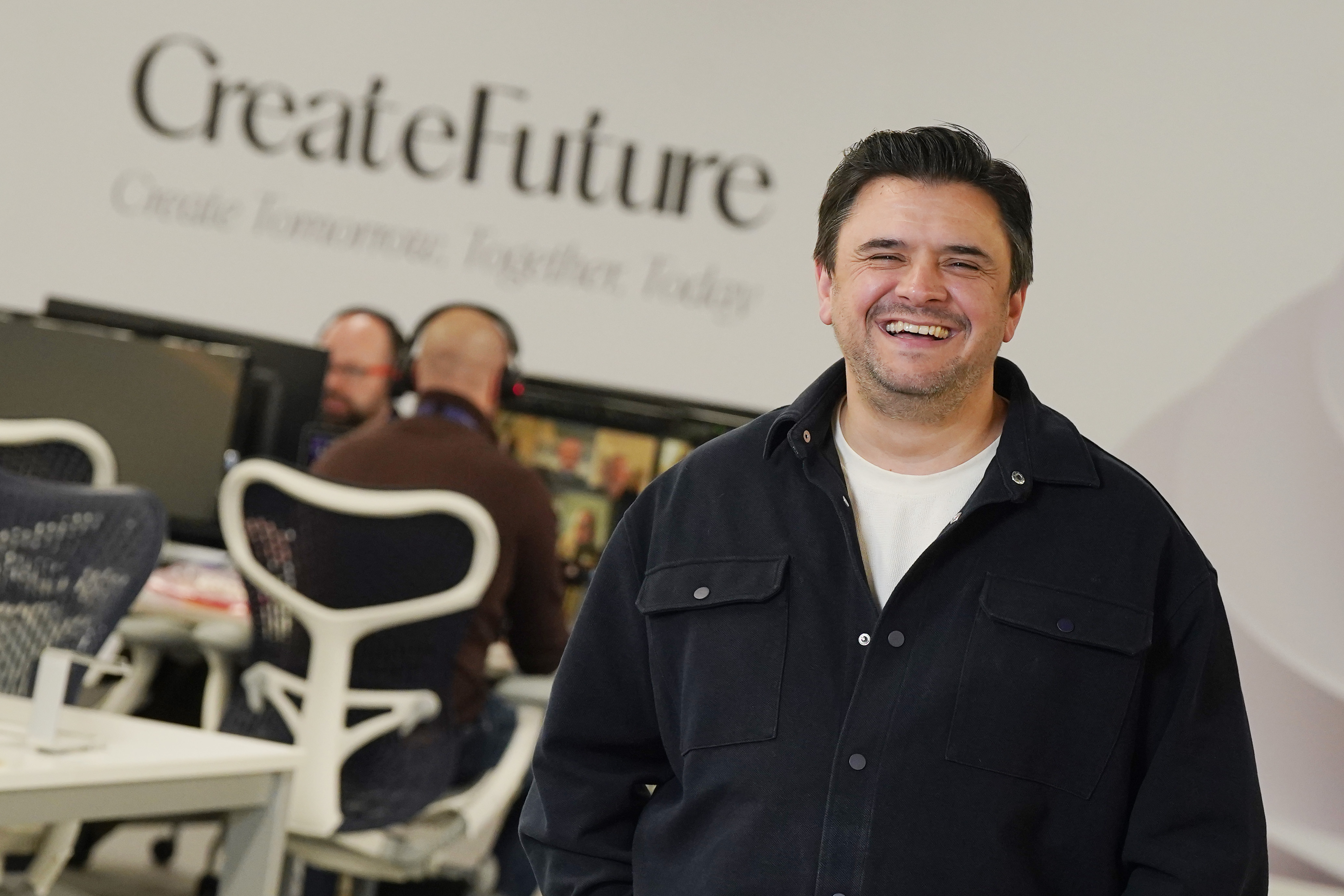
"For a long time, the iGaming industry has treated the Software Development Lifecycle (SDLC) like a high-stakes relay race. The product team designs a baton, hands it to business analysts, who hand it to developers, who eventually toss it over the wall to QA.
By the time that "baton" actually reaches a player’s hand as a live feature, the market has moved on and the opportunity has often evaporated. For 2026, the relay race model is dead. The winners are pivoting to an AI-Native SDLC, which isn't just about giving developers a tool to help them type faster. That was 2024. Today, being AI-Native means the entire lifecycle, from initial logic to deployment and is engineered to run on an integrated AI backbone. It is the fundamental difference between a faster horse and a jet engine.
In a traditional setup, developers spend a mere fraction of their time writing code while the rest is consumed by "friction tax": documentation, environment setup, and legacy debt. By moving to an AI-Native environment, we have flipped the script entirely. AI agents now handle the boilerplate, unit tests, and deployment manifests, freeing our best minds to do what we actually hired them for, which is solving complex architecture and dreaming up "world-first" features. When your developers are unburdened, your Speed to Value doesn’t just increase; it explodes.
The market sentiment at events like ICE has always suggested that building a quality, regulated product takes 18 to 24 months. In 2026, that timeline is an absolute death sentence for ROI. By weaving AI into the delivery pipeline, we have proven you can ship cutting-edge products in just five months. For C-levels, the math is simple: shorter cycles mean less capital locked in development hell, the ability to respond to regulatory shifts in weeks rather than years, and a culture where innovation becomes a daily habit because the cost of shipping has fallen so drastically. Software isn't "built" anymore; it's orchestrated. If you're still measuring progress by lines of code rather than velocity, you're missing the point. The company that puts value in the player’s hand the fastest wins. It’s time to stop running the relay and start flying."
Johnny Coetzer, Founder and CEO of Betlabs

"Dynamic Parlays represent one of the most meaningful shifts in sports betting mechanics in the last decade. For years, the traditional accumulator/parlay bet has offered high potential payouts at the cost of near-certain failure, creating a poor long-term player experience and extreme variance. Dynamic Parlays fundamentally change this equation by introducing flexible payouts instead of binary win-or-lose results.
Rather than losing the entire bet when one selection loses, Dynamic Parlays allow players to retain a payout even if part of their bet fails. This mirrors how players intuitively expect bets to work and aligns more closely with modern slot payout mechanic design. The result is longer engagement, higher retention rates, and a far more sustainable betting experience.
From an operator perspective, this is not simply a UX improvement but a commercial one. Dynamic Parlays increase parlay participation, reduce customer frustration, and smooth revenue volatility without relying on bonuses or margin manipulation.
As player expectations continue to evolve in 2026, betting products that offer flexibility, transparency, and tiered based payouts will outperform legacy bet types.
Dynamic Parlays are not an add-on feature, they are a re-definition of how multi-leg betting works."
Christina Savvouri, Gaming Laboratories International

"One of the most significant trends shaping the industry in 2026 is the continued evolution of regulation. Established jurisdictions are refining existing frameworks, while emerging markets are still defining their technical and operational expectations.
In 2026, the ability to adapt quickly to regulatory nuance; without compromising integrity will be a defining competitive advantage. Success increasingly depends on an organisation’s ability to design products and systems that are both flexible and provably compliant; a challenge made more complex by a paradox. On one hand, rising taxes, expanding regulatory requirements, and stricter oversight are pushing barriers to entry higher than ever. For some operators, particularly smaller or emerging ones, the question is no longer just how to comply, but whether remaining in regulated markets is commercially sustainable.
On the other hand, we are seeing grey market operators and segments of the industry, with no legal framework in place, begin to self-regulate. Non jurisdictional testing certification, responsible gaming practices, and internal governance measures are emerging as operators recognise the commercial and reputational value of trust; even outside formal requirements.
It’s would thus be safe to say compliance is increasingly no longer a downstream activity or a final box to tick; it is becoming an integral part of product architecture, influencing everything from game logic and system design to deployment models and update strategies.
Technological complexity is also rising and AI-supported game features, remote software updates, server-based architectures, and increasingly cashless ecosystems are no longer rarities. The challenge will not be whether these technologies can be deployed, but whether they can be validated transparently and consistently across multiple jurisdictions.
Regulators are also increasingly focused on outcomes rather than intent: player protection, fairness, and technical resilience are no longer “nice to have” but foundational. There is also greater emphasis on operational integrity. Attention is shifting beyond individual products to the processes that support them, including change management, cybersecurity, data governance, and ongoing system monitoring.
The coming years may mark a turning point for the industry: one that genuinely separates the wheat from the chaff. Success will depend not just on innovation, but on the ability to operate responsibly, sustainably, and transparently whether in highly regulated markets or emerging spaces where the industry is quietly self-regulating."
Betting.bet

"As we look ahead to 2026, the iGaming affiliate landscape is being reshaped by both significant challenges and exciting opportunities. Regulatory shifts, rising acquisition costs, and increasing demand for transparency are driving affiliates to rethink strategies, while advancements in data analytics and AI-driven targeting are unlocking new growth avenues. At betting.bet, we’re committed to staying at the forefront of these changes. Our recently launched Betting Sites Hub exemplifies this — offering deeper personalisation, smarter targeting tools, and richer insights that empower affiliates to connect with customers more effectively than ever. In a rapidly evolving market, innovation isn’t just an advantage — it’s essential.”
Gavin Grimes, Director and Co-Founder of AI CMO and Quik Gaming Ltd

"Walk into the boardroom of any tier-one operator right now, and the executives are deep in a three-day strategy session. They’re wrestling with a single, terrifying question: How do we evolve without killing the goose that laid the golden egg?
It’s a valid fear. But while the giants debate, the landscape is shifting beneath their feet.
As Co-Founder of The AICMO, I’ve had a front-row seat to this disruption. The industry has splintered into three distinct camps regarding Artificial Intelligence. You have the "AI slop" crowd who refuse to touch it. You have the "testers" dipping a toe in the water. And then you have the AI Natives.
If you’re in group one or two, you might be in trouble.
The Financial Imperative
We can’t ignore the elephant in the room—or rather, the taxman. Recent UK tax changes have provided a massive impetus to explore AI from a "necessity is the mother of invention" perspective. Plenty of operators have just slipped into the red.
They aren't just looking at AI for innovation’s sake; they’re exploring it to slash operational costs and offset a punishing increased tax burden. It’s no longer about getting ahead; it’s about staying afloat.
The Three Types of Companies
Let’s break down the current state of play. The gap between these groups is widening every week.
1. The Skeptics
These are the folks dismissing the tech as "AI slop." They don't like it, they don't trust it, and they swear they'll never use it. In a year or two, they simply won't be able to compete on margin.
2. The 'Toe-Dippers'
This is the most crowded group. "We are evaluating." "We're running a pilot." It sounds prudent, but in a market moving this fast, hesitation is expensive. While they run a three-month evaluation on a single tool, the natives have iterated their entire workflow multiple times.
3. The AI Natives
For these companies, AI is the first thought, not an afterthought. They are the future powerhouses. Look at agile players like certification house, Risk Cherry. They are small, lean, and efficient. Key metrics like revenue per full-time employee are going through the roof because AI is embedded into their platform and daily workflows.
B2B vs B2C: A Tale of Two Speeds
There is a stark contrast in how different sides of our industry are adapting. The B2B sector is arguably winning the race. They are heavily invested, using AI to deliver elevated experiences in customer service, VIP management, and sales outreach.
We are seeing platforms specifically designed to automate these complex flows. For instance, companies are now deploying "agentic" AI that doesn't just predict behaviour but builds and executes campaigns instantly.
B2C operators, however, are struggling. They are bogged down by internal friction:
- Who decides? Is it a top-down mandate or bottom-up innovation?
- Compliance paralysis: Trying to balance brand consistency and strategy with strict regulation is a nightmare.
- The resource trap: Investing time in AI feels like a risk to Business As Usual (BAU) activity.
- The workflow integration: the most difficult part of AI integration, there are amazing tools out there but how do they get deployed into tight workflows on even tighter timelines?
There are exceptions. Pockets of the big guys are using AI responsibly—FanDuel, for example, has deployed AI to monitor deposit patterns for responsible gambling. But this is rarely part of a holistic business transformation.
The Future is Native
2026 will see "AI Native" become the aspiration at all levels. The winners will be the ones who stop treating AI as a side project and start treating it as their operating system.
What you can say with certainty is that AI is not a bubble. Some companies will fail, yes. But the technology is here to stay.
The time for "dipping your toe in" has passed. To survive the coming tax pressures and competitive squeeze, you need to embrace AI through genuine integration.
Josh Gamble, Managing Director & Partner at ActiveWin, Chief Operations Officer at Rdentify

"The UK iGaming sector faces a seismic shift in 2026 as the Remote Gaming Duty rises to 40%, placing unprecedented pressure on operators’ margins. From a player acquisition perspective, this fundamentally changes the economics of both paid media and affiliate marketing. Lifetime value calculations shrink, and channels that were once profitable at scale may no longer deliver returns, forcing operators to adopt more selective, performance-driven strategies. The focus is shifting from chasing volume to acquiring fewer, higher-quality players who generate sustainable revenue.
Paid media budgets are expected to contract, particularly for casino-heavy brands. Generic PPC campaigns and broad social prospecting are becoming marginal, while brand search, retargeting, and CRM-driven paid acquisition emerge as the most reliable channels. Operators will increasingly leverage automation and AI to optimise campaigns based on revenue signals, but human oversight will remain critical to ensure rapid decision-making and strict adherence to new profitability thresholds.
The affiliate landscape is set for a major shake-up. CPA deals are being scaled back or replaced with rev-share agreements, reflecting operators’ need to share risk under higher tax burdens. Smaller affiliates are likely to struggle, while top-tier partners will consolidate market share. Operators are demanding stronger compliance, higher-quality traffic, and closer integration with responsible gambling initiatives, turning affiliate management into a strategic exercise rather than a purely volume-driven approach.
Overall, the tax changes are shifting the player acquisition mindset from growth-at-all-costs to quality-and-retention-first. Operators are increasingly focused on optimising the early player lifecycle and leveraging first-party data to protect margins. While paid media will remain essential for brand protection and retention, affiliate programs will evolve toward more selective, performance-based partnerships. The net effect is a more disciplined, efficiency-driven market that prioritises long-term sustainability over short-term volume....
Justin Deaville, Managing Director, Receptional

The AI Discovery Shift: Why Half Your Customers Won't Find You
The data is stark. US research shows under-30s now use AI as often as they use Google.
ChatGPT visits grew fivefold last year - from 368 million to 1.8 billion in the UK, with similar growth across Europe and North America.
One in three Google searches now includes an AI-generated answer.
For betting brands, this creates an urgent problem: many brands are optimising for yesterday's customer journey.
We recently tested how four major AI platforms respond when asked about betting operators. We analysed 50 UK brands across hundreds of queries. The result? Just six brands are consistently recommended. The other 44 might as well not exist.
This isn't a future concern. It's happening now.
Here's why it matters: when AI recommends your brand, people can convert three times more often than traditional advertising. They're not browsing. They've asked a question, and they trust the answer. If you're not in that answer, you've lost them.
The shift is generational. Younger players - Gen Z - don't compare ten websites anymore. They ask AI one question: "What’s the best football betting app?" AI picks one or two brands. That's your new competition, not ten alternatives, but the single answer AI gives.
So what determines whether AI recommends you? It's simpler than you think: AI learns from what's published about you. News articles. Industry publications. Review sites. If respected sources don't talk about your brand, AI has nothing to say.
Making sure AI understands you - whether you call it AI SEO, or GEO and marketers haven’t yet agreed on a name – it’s more like brand marketing than the performance marketing on Google and social channels that we’ve become familiar with.
First, decide what you want to be famous for. Not everything. One thing you can own. Then make sure your story appears consistently - on your site, in press coverage, in industry discussions. If you want to be known for having the ‘best football betting app’ – make sure you’re talking about all the reasons
Many operators haven't started this work yet. The brands that move now will win disproportionate share as younger customers shift further towards AI discovery.
Traditional online marketing still works, of course. But if AI doesn't know your story, you're less visible to the audience that has the highest lifetime value.
The question isn't whether AI will change how customers find betting brands. It already has.
Mike de Graaff, BetComply's Co-Founder & Chief Compliance Officer
.jpeg)
More governments are recognising that regulating online gambling and making it a part of their wider digital economy is the best move for both consumers and the treasury.
This is creating a host of new opportunities for operators and suppliers. But while new markets mean new growth potential, they also bring additional compliance burdens.
So which newly-regulating markets are worth watching most closely this year?
Top of the list for me is Alberta.
Ontario has already demonstrated what liberalisation can deliver in Canada. Since launching its regulated online market in 2022, around 45 operators have entered, creating a competitive and diverse market that continues to attract investment.
Importantly, Alberta is closely following Ontario’s regulatory blueprint. That dramatically lowers friction for companies already active in Ontario. Licensing structures, compliance expectations and technical standards will feel familiar. For many, Alberta represents a natural next step rather than a leap into the unknown.
We should see the market become operational in the coming months. When it does, expect rapid early momentum.
Another market worth watching is Finland.
Finland is transitioning away from a long-standing state monopoly model. Operators can apply for licences from March 1, although the regulated competitive market is not expected to go live until July 2027.
That long runway creates an interesting dynamic. Major international operators will have plenty of time to prepare, localise products and build compliance infrastructure. Many will choose to apply early to secure a strong position ahead of launch.
However, competition will not start from zero. Former monopoly operator Veikkaus will continue operating as a commercial business. New entrants should not underestimate that advantage.
The third market I would highlight is Ireland. Ireland has now signed off on granting the Gambling Regulatory Authority of Ireland (GRAI) the power to begin issuing licences.
For many UK-facing operators, Ireland is particularly attractive. It offers geographic proximity, cultural familiarity and the potential to offset some of the cost pressure created by recent increases in UK gambling taxes.
That said, Ireland is not a soft-touch jurisdiction. Compliance will be taken seriously from day one. The GRAI has the authority to issue fines of up to €20 million.
The broader pattern across all these markets is consistent.
Governments are increasingly accepting the basic reality that it is better to regulate and supervise online gambling than to pretend it does not exist. Unregulated offshore markets provide fewer player protections and generate no domestic tax revenue.
At the same time, political focus on player protection is intensifying. New regimes are not free-for-all environments where companies can simply enter and extract value. Success will depend on deep understanding of local compliance requirements, investment in responsible gambling and the ability to adapt product offerings to regulatory constraints.
For companies willing to do the work, this is a healthy evolution. More regulation means more long-term stability to build better products and standards.
This is really encouraging, and best of all, I’d expect many others to follow Alberta, Finland and Ireland over the coming years.
Valentina Diaco, Founder of Profit Matches

1. The Strategic Paradigm: Aligning Profit with Purpose
The iGaming industry has reached a point of diminishing returns for those operating on the traditional model of aggressive, short-term acquisition. To secure a seat at the table in the coming decade, leadership must pivot toward a "profit with purpose" framework. In this context, "purpose" is not a vague ethical sentiment; it is the rigorous alignment of every commercial, marketing, and product decision with a fundamental "why" that ensures long-term sustainability. This alignment acts as a strategic filter, protecting the brand from the volatility of reactionary market shifts and regulatory headwinds.
The Evolutionary Context of AI
While the public consciousness was captured by the launch of generative models like ChatGPT, Artificial Intelligence is a 75-year-old discipline rooted in Alan Turing’s foundational inquiry into machine cognition. We have moved beyond the era of experimental machine learning where models quietly optimized media buying into an era of total democratization. AI is now a commodity, analogous to electricity or cloud computing. Because the barrier to entry has evaporated, a company’s competitive moat no longer resides in access to AI, but in the sophistication of its application.
The Ferrari vs. Fiat 500: The Cultural Imperative
This shift demands a total reconfiguration of executive skillsets. To use a mechanical analogy: the industry has been handed the keys to a Ferrari, yet many organizations are still attempting to drive it with the cautious, limited mindset required for a Fiat 500. Modern iGaming leadership requires "thinking with AI" rather than simply "let’s use AI or let’s see what AI says" . Mastering this mindset is the prerequisite for building the next generation of data-driven infrastructure.
2. The Shift from Content to Data Infrastructure
The iGaming ecosystem is undergoing a structural transformation from a content-focused "search" environment to a data-focused "agentic" environment. As human browsing habits are replaced by AI-driven discovery, the strategic imperative is no longer to rank on a results page, but to become the "source of truth" for AI agents.
The AI-to-AI Economy
We are witnessing the emergence of the AI-to-AI economy, anchored by AI Registries and Model Context Protocol (MCP) servers. In this new landscape, AI agents ( not humans) are the primary consumers of data. These agents query registries to find specialized, authoritative data providers to fulfill user requests. When a player asks an AI for the best current crypto gambling bonus, the AI will not "read" a review site; it will call a structured data service via API.
Becoming the Data Layer
Content is no longer king; data feeds are the new kingdom.!
The directive for operators and affiliates is to transition from content producers to specialized data providers. By providing structured, trusted, real-time feeds such as live sportsbook odds or verified deal structures companies create an "infrastructure" solid foundation. This positioning ensures that your brand remains the underlying engine for the agents that will soon dominate the user journey.In a future where AI agents provide answers directly within their own interfaces, traditional SEO traffic will plummet. Success will be decoupled from "clicks" and instead be measured by deposits, ARPU (Average Revenue Per User), and LTV (Lifetime Value). The focus shifts from attracting eyeballs to providing the data that triggers a high-value transaction.
3. Intersecting AI with Blockchain: an interesting take
In an industry where transparency and fairness are non-negotiable, trust is the most valuable currency. While AI provides the "intelligence" to automate workflows, Blockchain provides the "truth" through an immutable ledger. This synergy creates an unbeatable competitive advantage in high-frequency, high-value transaction environments.
Strategic Use Cases for AI-Blockchain Integration
- Smart-Contract Affiliate Attribution: Resolving 15 years of tracking disputes by using AI agents to validate conversions on-chain, triggering self-executing contracts for instant, indisputable settlement.
- IP Protection for AI-Generated Content: Utilizing on-chain stamping to prove ownership of proprietary match previews and predictive odds models in an era where AI-generated data is easily remixed.
- Autonomous Compliance: AI agents performing real-time on-chain analytics to automate Source of Funds (SoF) verification and wallet risk scoring, satisfying the most rigorous AML requirements.
- Odds Verification: AI agents can detect anomalies and adjust pricing in real-time, while anchoring those calculations on-chain for auditability to satisfy regulatory transparency standards.
- AI-to-AI Transactions: Enabling a user’s AI agent to discover a data feed, execute a smart contract, and lock in a bonus or bet autonomously and securely.
The strategic punchline is clear: AI runs the workflows, and Blockchain certifies the truth. This combination is the ultimate solution for a trust-driven industry.
AI will not replace your teams, but teams using AI will inevitably replace those who do not. We are entering the era of AI-driven operations and an AI-to-AI economy the most significant structural shift the iGaming sector has seen in a decade. The companies that align their profit with a clear purpose and embrace the compounding effect of early adoption will define the future of the industry.
AI Match- the first Matchmaking platform dedicated to iGaming exists to help forward-thinking operators and partners move from theory to execution enabling smarter matches, cleaner economics, and purpose-aligned growth from day one.
If you believe profit should scale because it creates value not despite it then the next move is simple.
Bartek Borkowski, Managing Partner at CreateIt

“We work closely with iGaming companies to introduce AI at both product and organisational levels, and what’s striking is how consistent the requests have become across the industry. Almost everyone is asking for the same core capabilities, which tells us AI is no longer a “nice to have” — by 2026, it will be a baseline requirement.
What we’re seeing is AI moving from innovation buzzword to everyday utility. Many organizations already learnt that what few years ago required huge systems and a lot of effort, now could be solved easily with few neat AI-driven products and custom AI agents. This most likely will influence boxed, ready-to-use solutions for iGaming a lot. Broad one-and-for-all platforms we have seen so far may be in decline, in favor for such smart solutions that solve one clearly defined business problem extremely well. As we see it, organizations will build internal ecosystems of specialised products, connected by processes where people are supported by AI agents.
For game studios, this means AI being embedded across the entire development lifecycle — not just asset creation, but also maths, sound design, animations and core game logic. AI-driven image recognition is also becoming standard for QA, both during late development and in live production environments.
Game providers and studios are deploying AI to detect illegal game copies across the web, calculate promotional offers for operators using historical performance data, and automatically verify that their games are live and performing as expected on operator sites.
Operators, meanwhile, are using AI to monitor games from multiple providers for compliance, availability and technical errors — often identifying issues before regulators step in or revenue drops due to simple misconfigurations left unnoticed after deployment.
Beyond product use cases, there’s also a growing number of AI agents improving internal efficiency: from document recognition and cataloguing, to analysing client histories, to streamlining everyday communications.
AI is no longer just another innovation cycle — it’s becoming a real driver of operational effectiveness, tailored differently for each segment of the industry. This shift is already underway, and everything points to it accelerating rapidly throughout 2026.”
Belatra, CMO, Kateryna Goi

"Emerging markets and growth opportunities in 2026
Latin America continues to stand out as one of the most attractive growth regions for the iGaming industry in 2026. Regulatory progress, improving digital infrastructure and a predominantly mobile-first audience are driving steady demand for high-quality, localised game content. Players in the region demonstrate strong engagement and a clear interest in feature-driven gameplay with transparent mechanics and balanced volatility.
For Belatra, Latin America is a region of active development rather than a short-term opportunity. New game concepts are launched, tested and scaled in close cooperation with local operators, with market feedback directly shaping product decisions and creative direction. While Latin America remains a core focus, Belatra’s long-term growth strategy is built around broader expansion and continuous development, supported by flexible technology, adaptable game design and a portfolio designed to perform consistently across regulated markets.
Innovations in technology, platforms and player engagement
In 2026, innovation in iGaming is less about adding features for their own sake and more about building games that can adapt, grow and perform across different platforms. Operators expect flexibility. Players expect stability. Both expect speed. Belatra’s approach addresses these expectations, with technology that allows games to maintain their identity, performance and gameplay logic.
Engagement today is defined less by complexity and more by how naturally a game unfolds. Well-structured mechanics, balanced mathematics and features that feel purposeful keep players interested far longer than overloaded designs. Additionally, familiarity and depth are increasingly important: players respond strongly to game worlds and mechanics they already trust. The development of series and the continuation of popular titles has become a key part of content strategy. Belatra’s roadmap reflects this thinking, creating games that can evolve over time through new features and iterations rather than being treated as short-lived releases.
Shifts in consumer behaviour and expectations
Players are becoming more selective and deliberate in how they choose what to play. They notice quickly when a game doesn’t deliver, and just as quickly return to titles that feel thoughtful and well-structured. Smooth onboarding, clear feature explanations and intuitive interfaces are now expected as a baseline. What truly matters is consistency: games that respect the player’s time and keep them coming back.
There is also a noticeable shift from short bursts of excitement toward sustained engagement. Audiences respond to games that offer coherence, familiar themes and meaningful progression across multiple sessions rather than relying on sudden, unpredictable moments. Belatra’s approach reflects this change, focusing on clarity, recognisable systems and content that can grow with the player, encouraging engagement that lasts far beyond the first few rounds.
Looking ahead
As the industry continues to evolve, growth requires a thoughtful, long-term approach rather than short-term gains. For Belatra, this means building on insights from Latin America, developing technology that keeps games adaptable and scalable, and creating concepts that players return to again and again. Our roadmap includes expanding existing game worlds, continuing stories within the Mummyverse, and developing new titles that build on the mechanics and excitement of our battle-themed concepts. By combining regional insight, flexible platforms and a commitment to evolving content, we aim to grow steadily while keeping our portfolio relevant, engaging and ready for the markets of tomorrow."
155.io CEO and founder, Sam Jones

In the infancy of 2026, the next phase of gaming will be defined by how experiences are designed to capture attention, feel real, and reflect what today’s player generation actually wants to engage with.
At 155.io, we’re throwing the tired games script out of the window to focus on bringing physicality into digital play. Our latest hit, which launched at the end of last year, was Fish Tank. Players watch real coins drop into a water-filled tank and can wager on where they’ll land — going against the grain of the traditional dominance of purely digital RNG-based mechanics.
Outcomes are shaped by gravity, water flow, and chance, creating a hypnotic, mobile-first spectacle that feels tangible, unpredictable, and alive. Our philosophy is to create games built on real-world physics that stand in clear contrast to the fixed formulas dominating much of today’s casino space.
That contrast is becoming increasingly important. Casino lobbies are nearly all identical, with the same providers grabbing the real estate. Against that backdrop, physically driven games — from marble races and ping-pong drops to water-based flumes — stand out instantly. They offer something players can watch unfold, react to, and share.
This shift reflects changing consumer expectations. Today’s players are not just betting; they are scrolling, watching, sharing, and discovering content across TikTok, Instagram, and other social platforms. Attention is fragmented, loyalty is fleeting, and novelty matters. Games that blend spectacle, risk, and simplicity are better aligned with this reality than those relying solely on deeper menus or marginal feature tweaks.
What’s to come? I believe the opportunity lies in designing gambling experiences that are built for the smartphone screen, socially legible, and instantly engaging. Whether concepts like Fish Tank become staples online or migrate into physical casino environments remains to be seen. But they point toward a future where randomness isn’t just calculated — it’s dropped, bounced, and splashed in real time.
In the coming months, 155.io will be turning up the chaos yet again with a whole new betting game concept. Watch this space as we continue to shake up the industry for the better.
Alex Litvinenko, CEO at Spinjoy Games

2025 became the year of alignment for the market.
More structure. Clearer systems.
We focused on four priorities:
— speed of processes
— clarity of entry into the product
— creatives that feel native and emotional
— fast game loading for players in low-bandwidth markets
Players make decisions instantly. Especially in Africa and LATAM.
In the first seconds, they need to see where they win, where they take a risk, and why they should come back in 30 seconds.
Fast loading is part of the experience, not a technical detail.
Data became the foundation.
GEO logic became part of product thinking.
New slots create value when there is a strong idea behind them and a clear role in the portfolio.
Another important shift:
The focus is moving from single games to portfolios and platforms.
Operators prefer partners with a recognizable brand code and consistent creative identity.
The media image of a brand now supports the product and strengthens partner choice.
AI also found its place.
A practical engine for research, segmentation, and faster creative testing per GEO.
2026 is shaping into the precision era.
Hyper-segmented markets.
Localization by default — from UX to game tempo and performance.
AI-driven personalization as everyday practice.